Established by Senate Bill 64, the Kentucky Public Safety Peer Support Task Force aims to create a Best Practices Report and provide resources for developing effective peer support programs. Below you'll find highlights from the report, sample policies, and other essential resources. Download the full Best Practices Report here.
What is Peer Support?
Peer support for public safety employees involves providing emotional support from individuals who have experienced similar trauma or crises. This support encompasses a broad range of care, fostering resilience and recovery.
 Need for Peer Support
Public safety employees face high risks of psychological harm due to the traumatic incidents they encounter. According to the Substance Abuse and Mental Health Services Administration (SAMHSA), peer support is crucial in addressing these risks and improving mental health outcomes.

Benefits of Peer Support
Research shows that peer support programs offer numerous benefits, including:
- Humanizing Mental Health Challenges: Reducing stigma and fostering open discussions.
- Promoting Socialization: Helping individuals connect and reduce isolation.
- Enhancing Resilience: Providing tools for stress management and coping.
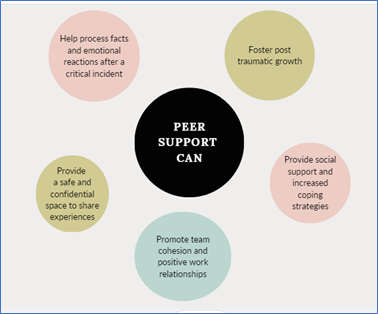
“The Value of Peer Support for First Responders” outlines the positive benefits of peer support programs. Studies that have investigated the benefits of peer support have found that peer support can help with the following :

Establishing a Peer Support Program
There are five core components to consider when establishing a peer support program: research and development, program design, implementation, maintenance, and evaluation.
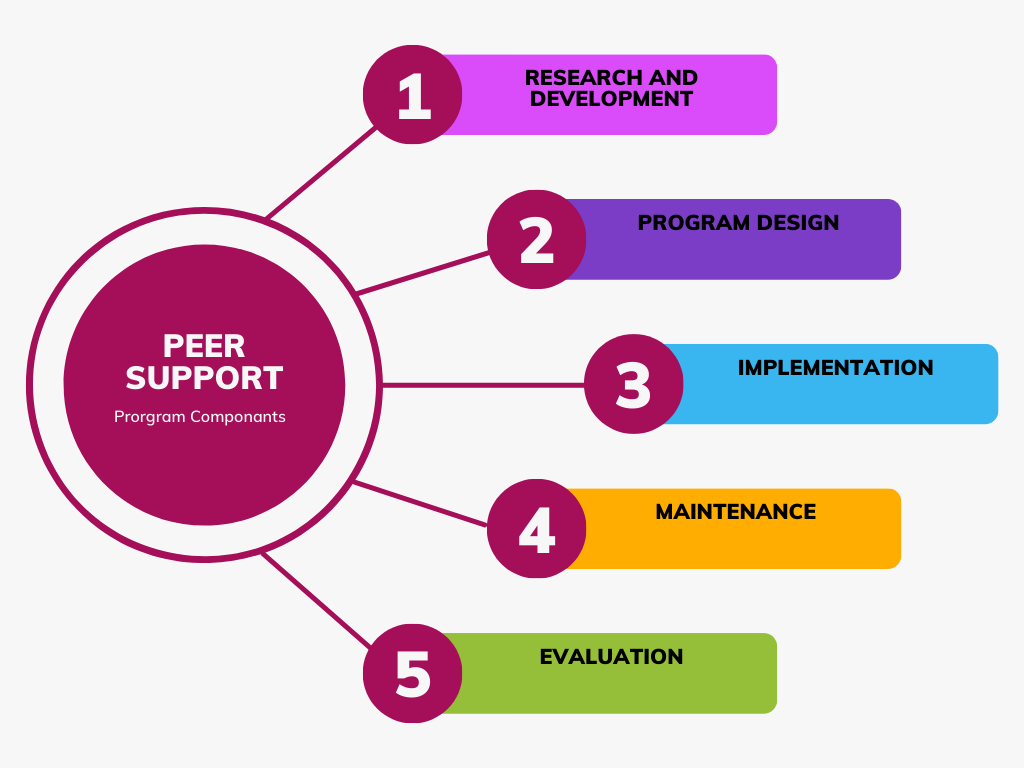
1 - Research and Development to Determine Organizational Readiness
- Conduct a needs assessment
- Determine stakeholder buy-in
- Locate and secure resources
2- Design the Program
- Develop protocols and procedures
- Establish roles, criteria, recruitment processes, and required training for peer supporters
- Create/select models for peer support interventions
3 - Program Implementation
- Reaching and engaging program participants
- Monitoring and supporting peer supporters
- Marketing the program
4 - Maintenance
- Create a plan for sustainability
5 - Evaluation
- Documenting processes
- Develop tools to evaluate outcomes/impact

Operation of a public safety peer support program
Ethical Standards
Because of the highly sensitive nature of the work of peer support programs, it is important to have clear ethical standards for the operation of the program and implementation by the peer support specialists. The first and foremost rule of peer support should be to “Do No Harm." Listed below are other defining factors that should go into any peer support program development:
- Provide a safe, comfortable, and neutral meeting space without leadership present. This includes county or city officials.
- Consider religious sensitivities. If a person brings up faith, listen with compassion and patience, affirm their values, and focus on stabilizing and normalizing the situation. Peer support meetings are not the time to discuss theology or docrtinal differences.
- Have a clear understanding of when participation will be required or not required.
- Develop a clear Conflict of Interest Policy and Statement for peer support specialists.
- Make sure there are measures in place to periodically assess the psychological well-being of peer support specialists.
- Create a method for reporting violations and sanctions.
- Make a protocol that peer support team members cannot provide services for a critical incident with which they were involved.
Confidentiality
Policies regarding confidentiality should be developed for all peer support programs that are consistent with state and federal laws, as well as organizational policies. Peer support team members should not keep formal written records of contacts with peers.
Sample Confidentiality Statement
Everything that is said during an intervention to a team member is confidential.
Team members will hold comments in the utmost confidence with the following exceptions:
- If someone makes a statement of threat to harm themselves.
- To bring harm to another person; or
- Engage in a violent act.
If this should occur, team members are required to report such statements or threats to the proper authorities. Additionally, we cannot guarantee that participants in this session will maintain confidentiality.
Establishing a matrix for training, continuing education, and recertification requirements for peer support specialists is critical. The matrix should list all required training, the number of hours of training required, and timelines for completion. In addition to training in active listening, stress management, and CISM techniques, peer support program team members should be trained in all policies and procedures of the program, including confidentiality, ethical standards, and referral for continued mental health services.
Existing Programs
Larger agencies in Kentucky have established peer support programs. Smaller organizations can seek assistance to build capacity and initiate their programs.
 Sample Policies
 Sample Confidentiality Policy.pdf
KACO Critical Incident Review and OIS.pdf
Intl Assoc of Chiefs of Police Peer Support Operation Guidelines.pdf
Sample Peer Support Policies.pdf
1-10-peer-support-program.pdf
1037 Peer Support Program.pdf
 Resources

Kentucky Public Safety Peer Support Task Force Members